Context
The Rio 2016 Olympic and Paralympic Games put the city in front of the world. UNAIDS and Brazil’s Ministry of Health, with UNESCO, UNFPA and the European Union Delegation, wanted to use that moment to talk about HIV prevention, testing and zero discrimination. The starting point was Principle 6 of the Olympic Charter, which says rights and freedoms must be secured without discrimination of any kind.
The problem
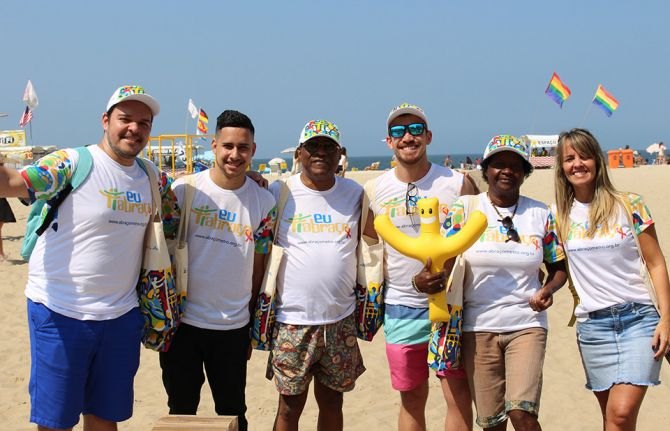
Condoms and information had to reach huge, transient, multilingual crowds spread across different sites, and the campaign had to show that it worked. Handing something out on a street corner gives no measure of participation, so people had to take part.
The idea
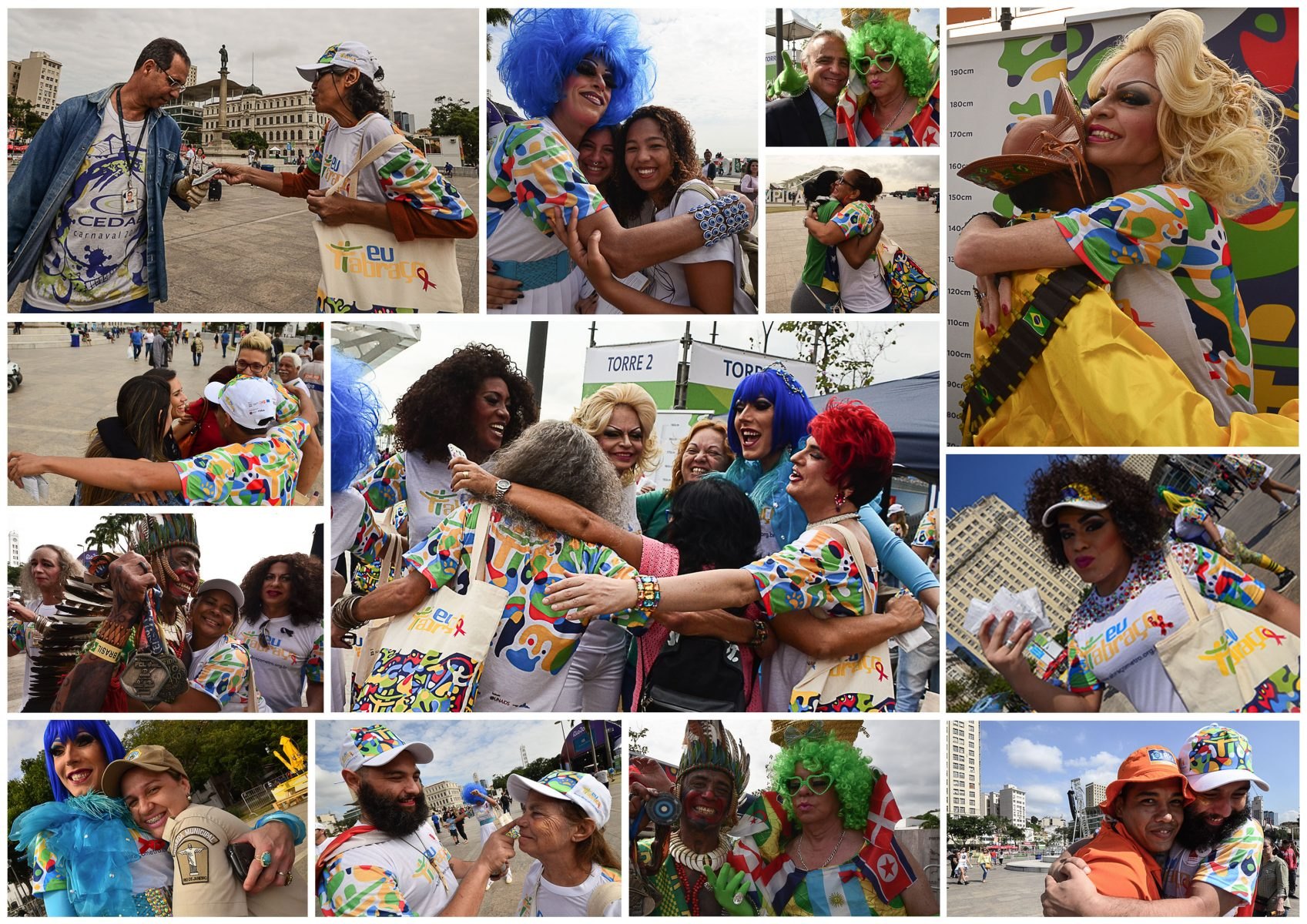
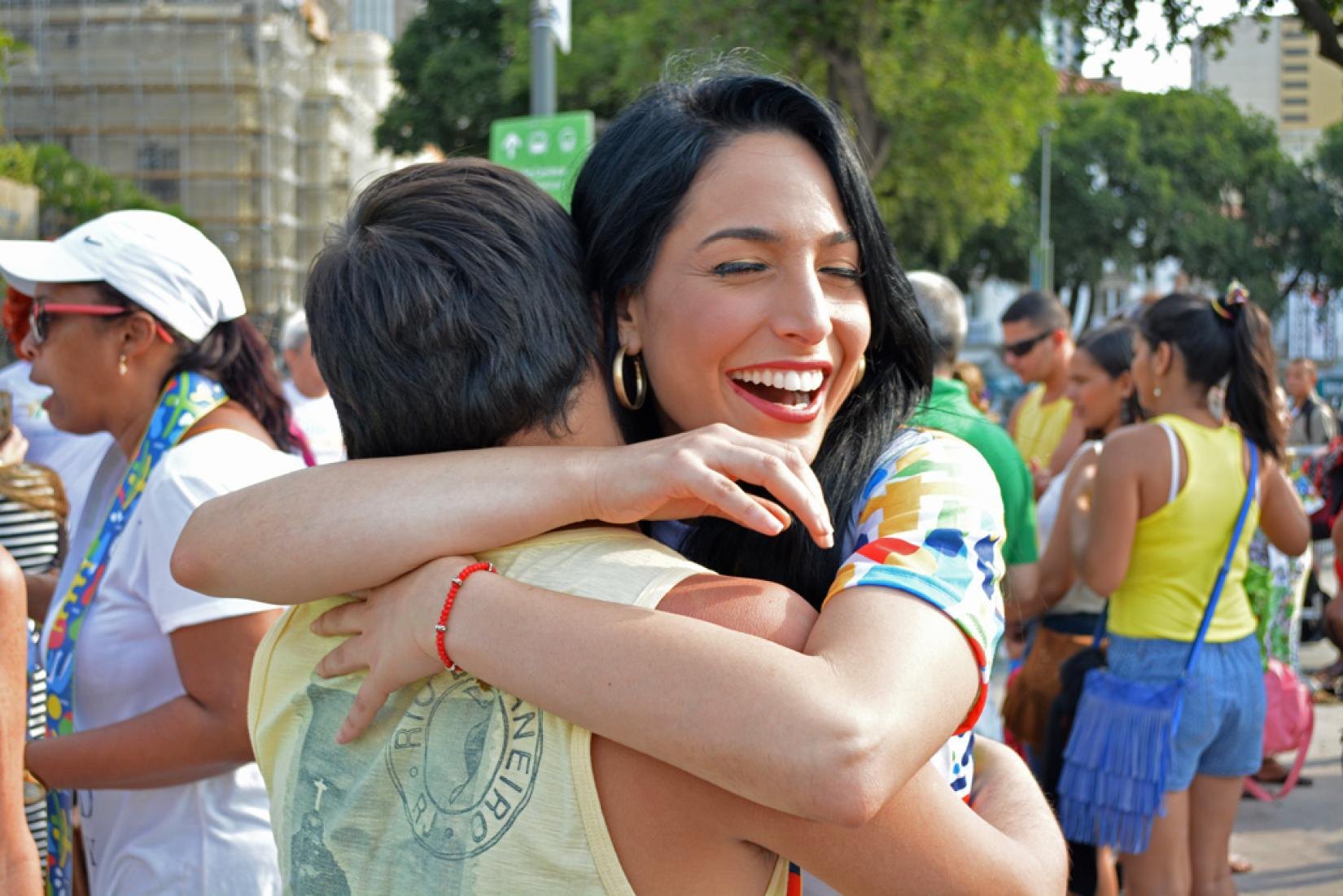
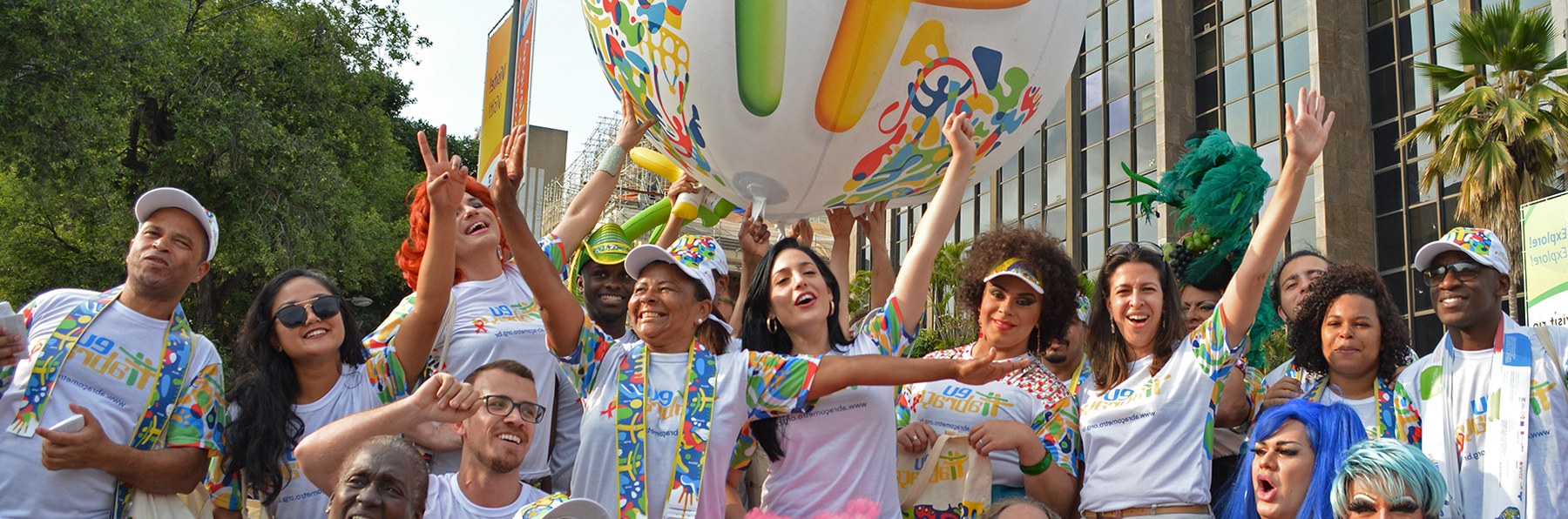
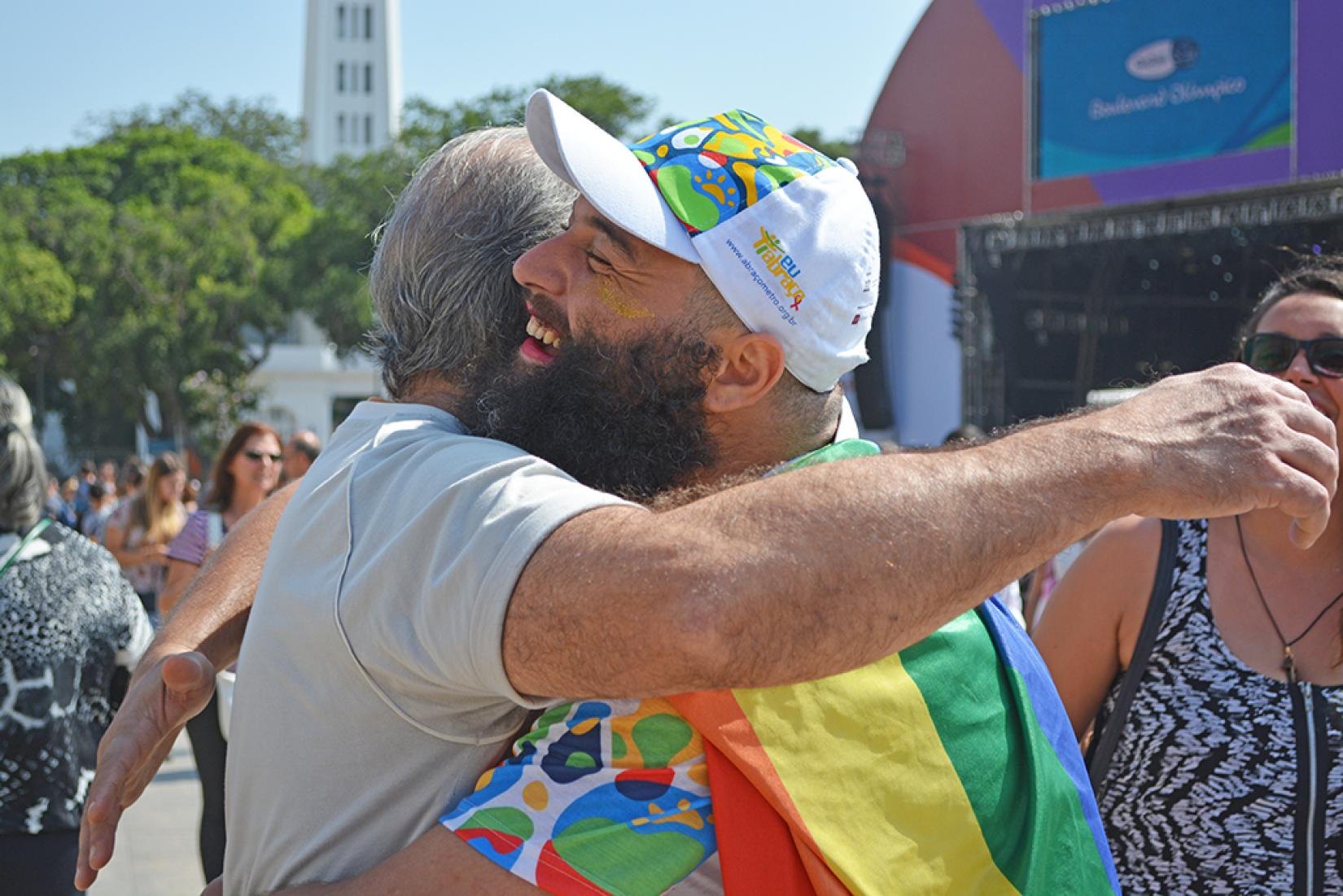
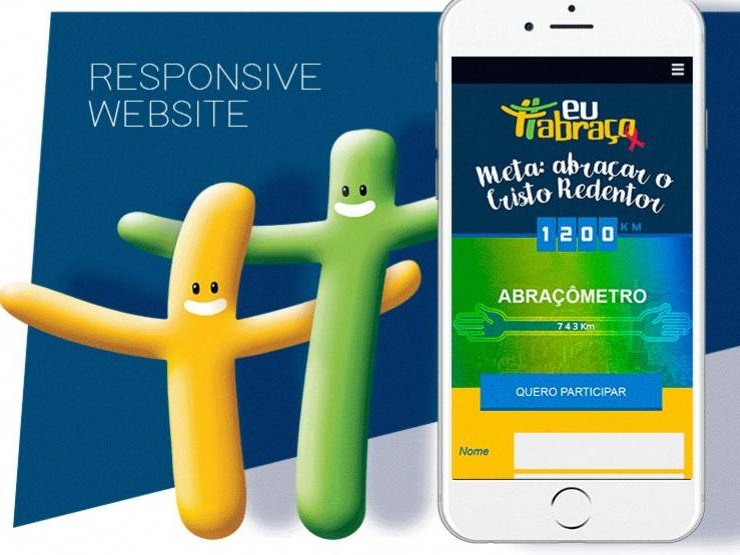
The hug is a gesture Brazilians know well, and people from Rio even more. The symbol joins a hashtag and a hug. On the street, volunteers and drag queens led abraçaços, collective hugs. Online, the Abraçômetro measured each hug by adding up the heights of the people in the photo, since our arm span is close to our height.
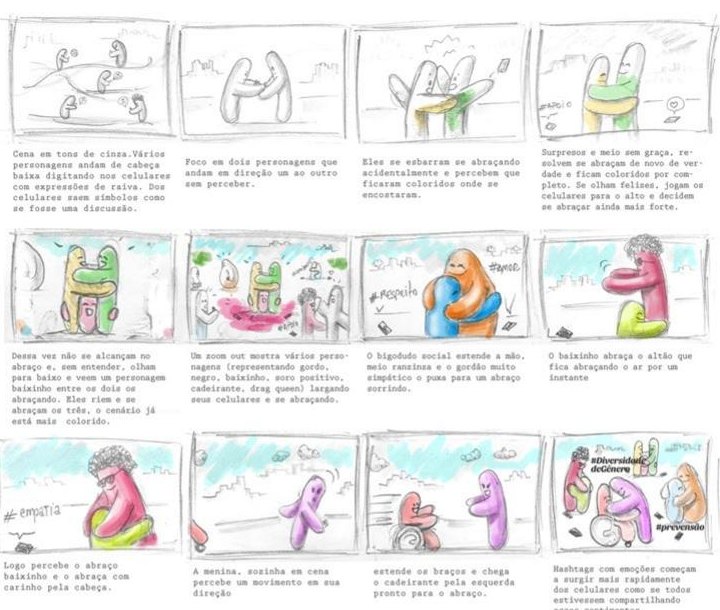
Two mascots, Hash and Tag, carried the campaign, and the identity came in four languages: Portuguese, English, French and Spanish.
My role
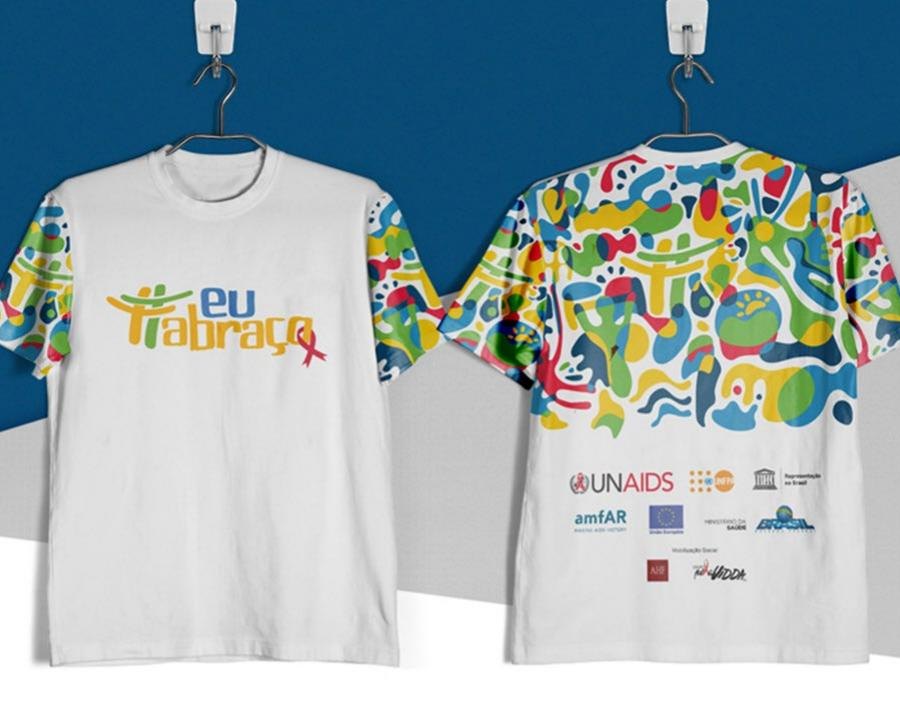
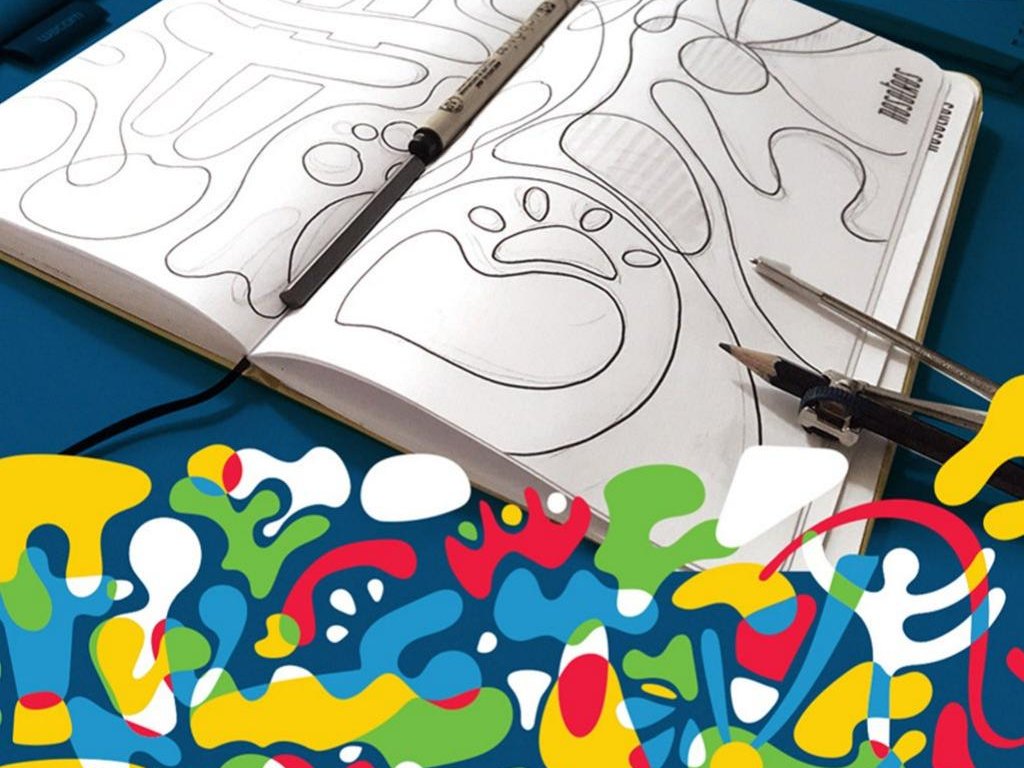
I created the concept with Daniel de Castro, from UNAIDS Brazil, and the Abraçômetro came out of our conversations. I designed every piece of the campaign: the logo and identity, the mascots Hash and Tag, the layout of the Abraçômetro website (another team programmed it), the measuring tape, T-shirts, caps, tote bags, stationery and the giant balloon.
I also did the art direction, drew the animation storyboard by hand and handled production, including the suppliers.